
8 Benefits of Smart Lighting Technology
Introduction
Lighting has always been an important component of home design, influencing everything from visibility and comfort to mood and functionality. In recent years, smart lighting technology has transformed the way homeowners interact with their living spaces. By combining modern lighting systems with digital controls, automation, and connectivity, smart lighting offers a level of convenience and customization that traditional fixtures cannot match.
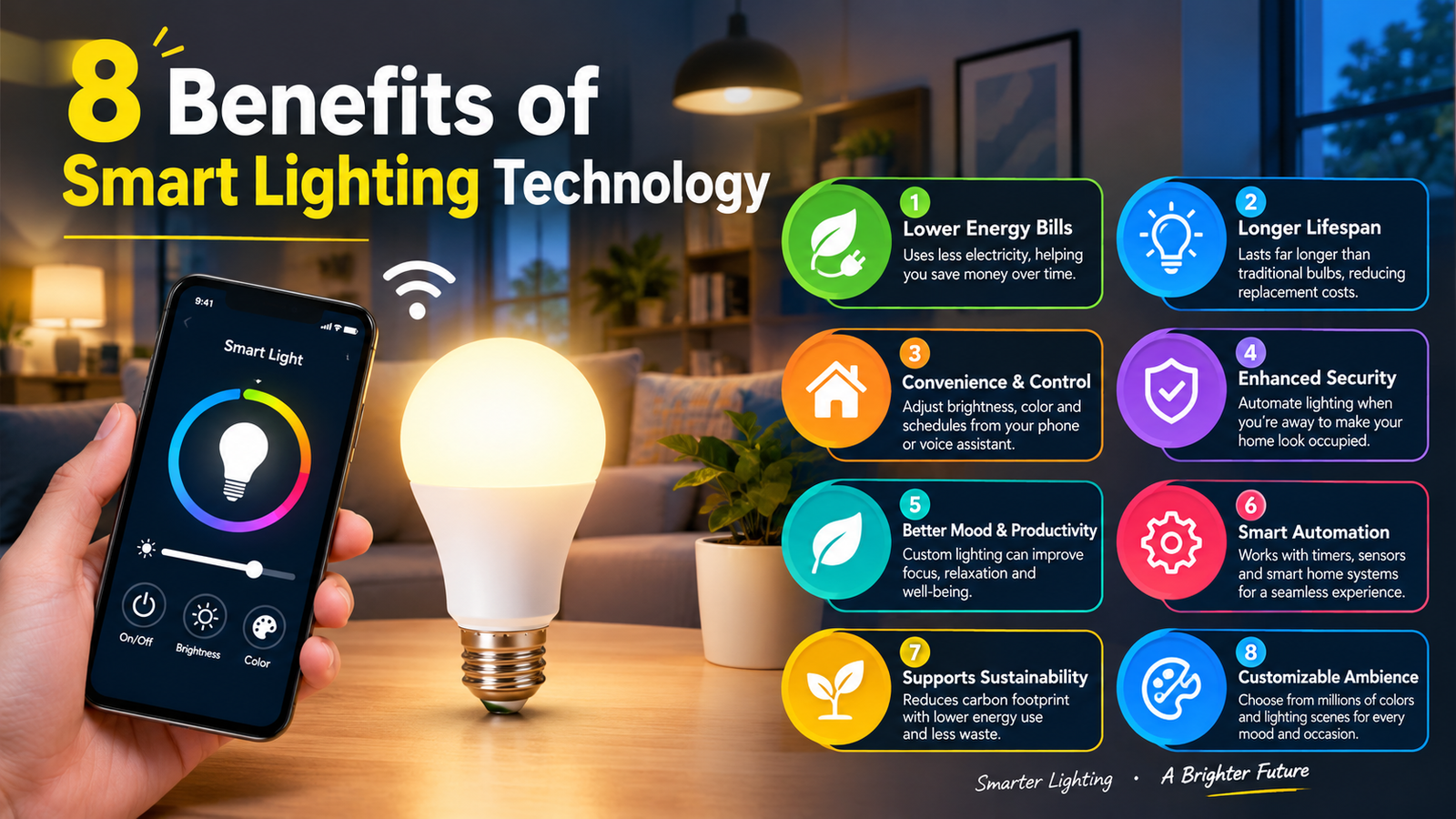
As more homeowners seek ways to improve efficiency, comfort, and flexibility, smart lighting has become an increasingly popular home upgrade. From adjusting brightness levels with a smartphone to creating automated schedules that align with daily routines, these systems provide practical benefits that extend beyond simple illumination. Understanding the advantages of smart lighting technology can help homeowners determine whether these solutions align with their lifestyle and home improvement goals.
Enhanced Convenience and Control
One of the most noticeable benefits of smart lighting technology is the ability to control lighting more conveniently. Traditional lighting systems require manual operation, while smart solutions allow homeowners to manage lighting through mobile apps, voice commands, or centralized control systems.
This flexibility allows lights to be adjusted from virtually anywhere within the home and, in many cases, even when away from the property. Whether turning off forgotten lights after leaving for work or adjusting brightness without leaving a comfortable seat, smart controls simplify everyday routines.
Many systems also allow individual lighting zones to be customized independently. Homeowners can create settings for specific rooms or activities, making it easier to adapt lighting conditions throughout the day.
The increased control provided by smart lighting contributes to a more personalized and user-friendly home environment.
Improved Energy Efficiency
Energy efficiency is another significant advantage of smart lighting systems. Many homeowners are looking for ways to reduce energy consumption while maintaining comfort and functionality throughout their homes.
Smart lighting solutions often include features such as dimming capabilities, occupancy sensors, motion detection, and programmable schedules. These tools help ensure that lights operate only when needed and at appropriate brightness levels.
Automated schedules can turn lights off during vacant periods or reduce unnecessary usage during daylight hours. Occupancy sensors add another layer of efficiency by automatically activating or deactivating lighting based on room activity.
Because energy usage can often be monitored through connected applications, homeowners gain greater visibility into their lighting habits. This awareness can encourage more efficient behavior and support long-term energy savings.
The combination of automation and data-driven control makes smart lighting a valuable tool for improving household efficiency.
Greater Customization for Different Activities
Modern homes often serve multiple purposes throughout the day. A room may function as a workspace in the morning, a family gathering area in the evening, and a relaxation space at night. Smart lighting systems make it easier to adapt to these changing needs.
Customizable settings allow users to adjust brightness levels, color temperatures, and lighting scenes to suit specific activities. Brighter illumination may support productivity during work hours, while softer lighting can create a more relaxing atmosphere later in the day.
This adaptability extends to entertainment spaces as well. Movie nights, dinner gatherings, reading sessions, and social events can each benefit from tailored lighting environments designed to enhance the experience.
Many homeowners and design professionals appreciate the flexibility that smart lighting introduces into residential spaces. A Bay Area interior designer may incorporate programmable lighting features into a broader design strategy that emphasizes both aesthetics and functionality, allowing homeowners to adjust the atmosphere of a room with minimal effort.
Customization helps ensure that lighting supports how each space is used rather than relying on a single fixed setting.
Enhanced Home Security
Smart lighting can also play an important role in supporting home security. Lighting has long been used as a deterrent to unwanted activity, and modern technology expands those capabilities significantly.
Automated schedules can create the appearance that occupants are home even when traveling or away for extended periods. Lights can be programmed to turn on and off at specific intervals, helping maintain a lived-in appearance.
Some systems integrate with broader smart home security platforms, allowing lighting to respond automatically to motion detection, door activity, or security alerts. Exterior lighting can illuminate pathways, entryways, and key areas around the property when activity is detected.
Remote access further enhances security by allowing homeowners to verify and adjust lighting conditions in real time. This added control can provide peace of mind and improve overall situational awareness.
Lighting serves both practical and protective functions, making it a valuable component of a comprehensive home security strategy.
Increased Comfort and Daily Routine Automation
One of the most appealing aspects of smart lighting technology is its ability to support daily routines automatically. Rather than requiring constant manual adjustments, lighting can be programmed to align with household schedules and preferences.
Morning routines may benefit from gradually increasing light levels that create a more natural transition into the day. Evening schedules can automatically reduce brightness to support relaxation and create a calmer atmosphere.
Automation can also improve accessibility for individuals who have mobility limitations or busy schedules. Voice control and hands-free operation make it easier to manage lighting without interacting directly with switches.
These conveniences contribute to a more comfortable living environment while reducing the need for repetitive manual adjustments throughout the day.
By integrating seamlessly into daily routines, smart lighting often becomes a feature that homeowners quickly come to appreciate.
Better Integration With Smart Home Systems
As smart home technology continues to evolve, lighting systems are increasingly becoming part of larger connected ecosystems. Integration allows lighting to work alongside thermostats, security systems, entertainment platforms, and other smart devices.
Coordinated automation can create more efficient and cohesive household experiences. For example, lighting may adjust automatically when a smart lock is activated, a security system is armed, or a home theater system is turned on.
Integrated systems help simplify home management by centralizing control through a single application or interface. Rather than managing each technology independently, homeowners can create unified routines that improve convenience and functionality.
This connectivity contributes to a more streamlined and personalized living experience while supporting future technology upgrades.
Conclusion
Smart lighting technology offers numerous benefits, including improved convenience, greater energy efficiency, enhanced customization, stronger security, increased comfort, and seamless integration with modern smart home systems. These advantages make smart lighting a practical upgrade for homeowners seeking both functionality and flexibility. By allowing greater control over how spaces are illuminated, smart lighting supports evolving lifestyles while enhancing the overall living experience. As home technology continues to advance, smart lighting remains one of the most accessible and impactful ways to improve comfort, efficiency, and everyday convenience.



Leave a Comment